

Table of Contents
- Why Artisanal Perfume Oils Stand Apart From Alcohol-Based Fragrances
- How to Choose Perfume Oil Online Without Testing First
- What Makes Authentic Perfume Oils Worth the Investment
- Understanding Perfume Oil Ingredients and Skin Compatibility
- Perfume Oil Longevity: How Long These Fragrances Actually Last
- Fragrance Families and Scent Profiles to Match Your Style
- How to Apply, Store, and Layer Artisanal Perfume Oils
- Conclusion
- Frequently Asked Questions
Last Updated: October 5, 2026
Why Artisanal Perfume Oils Stand Apart From Alcohol-Based Fragrances
Artisanal perfume oils are fundamentally different from the alcohol-based fragrances you find in department stores. Where conventional perfumes rely on alcohol as a carrier, artisanal perfume oils are concentrated scent essences applied directly to skin. This distinction matters because it changes everything about how the fragrance behaves, how long it lasts, and what it does to your skin.
The core difference lies in concentration. Artisanal perfume oils typically contain a higher concentration of fragrance oils blended with carrier oils like jojoba, argan, or coconut oil. That higher concentration means the scent stays closer to your skin, creating what fragrance enthusiasts call a "skin scent", intimate rather than projecting across a room.
At Simply Skin, we craft artisanal perfume oils that prioritize this intimate experience. Our formulations draw from time-honored traditions and the finest ingredients, translating nature's purity into scents that evoke personal memories and emotional well-being.
Alcohol-based fragrances evaporate quickly, which is why you need to reapply them throughout the day. Artisanal perfume oils absorb into your skin and develop over hours, often lasting significantly longer. The oil base also means less irritation for people with sensitive skin or fragrance sensitivities, there's no volatile alcohol stripping moisture or triggering headaches.
How to Choose Perfume Oil Online Without Testing First
Buying artisanal perfume oils online without smelling them first feels risky, but it's entirely manageable once you know what to look for. The key is understanding fragrance families, reading detailed scent descriptions, and knowing your own preferences deeply enough to make an educated choice.
Start by identifying your fragrance family preference. Oriental fragrances are warm, sensual, and often feature oud and musk, they're intimate and enveloping. Floral oils emphasize rose, jasmine, or peony and tend toward romance and elegance.
Read the scent profile description carefully. Legitimate artisanal makers describe not just the fragrance name but the top notes (what you smell in the first 15 minutes), heart notes (the middle phase), and base notes (what lingers for hours). This progression matters enormously.
Look for transparency about ingredients. Authentic artisanal perfume oil makers list what's actually in the bottle: specific essential oils, absolutes, attars, or fragrance compounds, plus carrier oils. If a listing says "fragrance blend" and nothing else, you're dealing with a generic product, not an artisanal one.
Check bottle size and concentration claims. Artisanal perfume oils come in small formats, typically 6ml, 10ml, or 12ml roll-on bottles, because a little goes a long way. Concentration should be stated or implied through pricing and reviews.
What Makes Authentic Perfume Oils Worth the Investment
Authentic artisanal perfume oils cost more than mass-market fragrances, and that price difference reflects real differences in how they're made and what goes into them. Understanding those differences helps you evaluate whether the investment makes sense for your needs.
Artisanal makers use traditional perfumery methods that take time and skill. Many blend their oils by hand, adjusting proportions based on how different essences interact. This isn't assembly-line work, it's craft. Quality ingredients cost more too.
The concentration difference justifies the cost difference directly. You use a fraction of the amount compared to alcohol-based perfume. Artisanal perfume oils are concentrated, meaning a little goes a long way. The math often favors the oil in terms of cost per wear.
Longevity is another value factor. Artisanal perfume oils don't evaporate into the air, they stay on your skin and develop over time. You get hours of scent evolution rather than a bright burst that fades within 90 minutes. That staying power means fewer reapplications and more consistent fragrance experience throughout your day.
The emotional component shouldn't be overlooked. Artisanal perfume oils are designed to evoke memories and create emotional connections. Mass-market fragrances prioritize mass appeal.
Understanding Perfume Oil Ingredients and Skin Compatibility
Knowing what's in your perfume oil matters, especially if you have sensitive skin or fragrance allergies. Artisanal perfume oils typically contain three categories of ingredients: fragrance components, carrier oils, and sometimes preservatives or stabilizers.
Fragrance components include essential oils (distilled from plant material), absolutes (solvent-extracted concentrates), attars (traditionally distilled oils from flowers or herbs), and fragrance compounds. Essential oils are volatile, they evaporate, so they're usually blended with carrier oils.
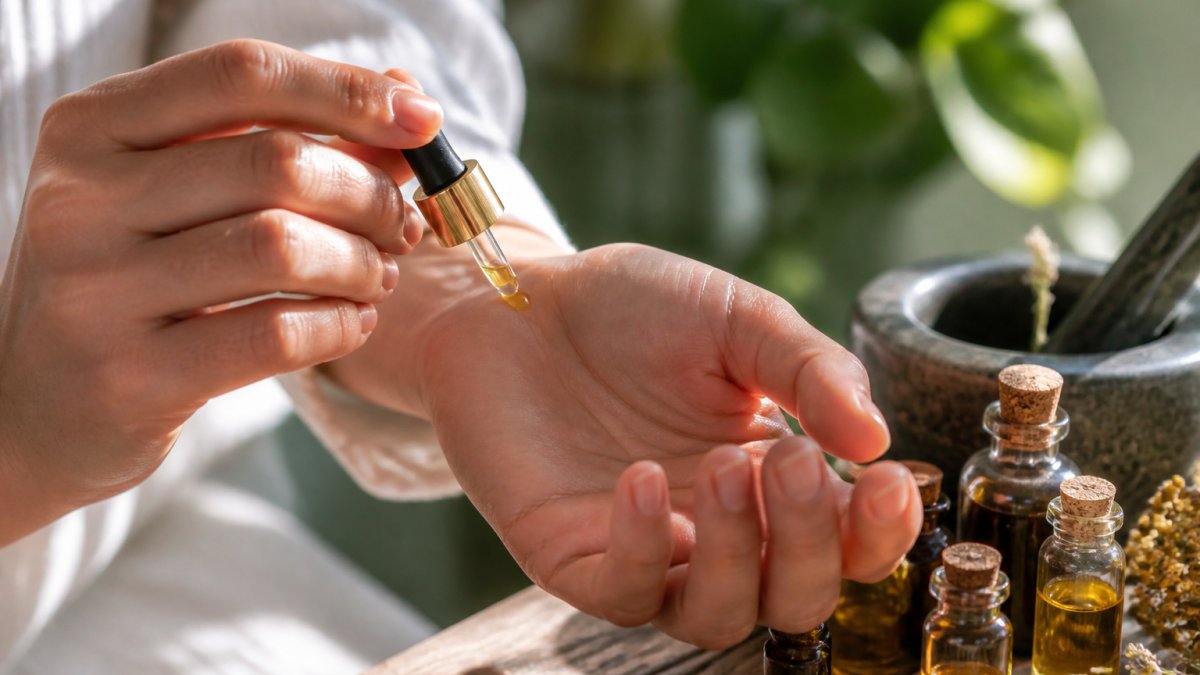
Carrier oils form the base of artisanal perfume oils. Jojoba oil is popular because it closely mimics skin's natural sebum and absorbs quickly without leaving a greasy feel. Argan oil is nourishing and slightly lighter.
Check ingredient lists for common allergens if you have known sensitivities. Fragrance allergies often stem from specific compounds, some people react to certain musks, others to specific floral absolutes.
Natural doesn't automatically mean hypoallergenic. Some people react to natural essential oils or absolutes just as they would to synthetics.
Perfume Oil Longevity: How Long These Fragrances Actually Last
Longevity is one of the most common questions about artisanal perfume oils, and the answer depends on several factors: concentration, your skin chemistry, the specific fragrance family, and application method.
Well-formulated artisanal perfume oils typically last for hours on skin. The oil base doesn't evaporate the way alcohol does, it stays on your skin and develops over time. Top notes might fade after a few hours, but heart and base notes continue unfolding for many more hours.
Your skin chemistry significantly affects longevity. Oily skin can cause fragrance to develop differently, the natural skin oils interact with the fragrance oils, sometimes intensifying the scent, sometimes altering it.
Fragrance family matters too. Woody and oriental fragrances with heavy base notes (oud, musk, sandalwood) typically last longer, 8-12 hours or more. Citrus and fresh oils tend toward 4-8 hours because the top notes that define them are more volatile.
Application method and amount affect longevity. Roll-on bottles deliver a controlled amount. If you apply more, you extend the longevity but risk overwhelming the scent. The best approach is to apply to pulse points (inner wrist, behind ears, inside elbow) where skin is warmer and fragrance develops more noticeably.
Fragrance Families and Scent Profiles to Match Your Style
Understanding fragrance families helps you navigate the artisanal perfume oil market and find scents that align with your personal style and preferences. Each family has distinct characteristics and emotional associations.
Oriental fragrances are warm, sensual, and often intoxicating. They typically feature oud, musk, amber, or vanilla as base notes, often combined with spices, florals, or woods.
Floral fragrances emphasize flowers, rose, jasmine, peony, lily, or gardenia. They range from light and airy (single-flower florals) to rich and heady (multi-floral blends). Florals often feel romantic and classic.
Woody fragrances center on sandalwood, cedarwood, vetiver, or oud. They're grounding and earthy, often with a slightly dry or smoky character. Woody scents appeal to people who want depth and sophistication without sweetness.
Fresh and citrus fragrances are bright, energizing, and typically shorter-lasting. They feature lemon, bergamot, grapefruit, or other citrus notes, often combined with herbs or light florals. These scents feel clean and uplifting. They're ideal for daytime wear or for people who prefer subtle, non-intrusive fragrances.
Chypre fragrances blend citrus top notes with floral hearts and woody or mossy base notes. They're sophisticated and balanced, not too sweet, not too heavy. Chypres work well for people who want complexity without overwhelming intensity.
How to Apply, Store, and Layer Artisanal Perfume Oils
Getting the most from your artisanal perfume oil means applying it correctly, storing it properly, and understanding how to layer multiple scents if you choose to.
Apply perfume oil to pulse points where skin is warmest: inner wrists, behind ears, inside elbows, and the base of your throat. The warmth helps the fragrance develop and project slightly. Roll-on bottles make this easy, just roll directly on skin.
Some people apply perfume oil to their hair or clothing for different effects. Hair holds fragrance longer because it's porous and doesn't have the pH variations of skin. Clothing creates a subtle scent trail. However, oils can stain delicate fabrics, so be cautious.
Storage matters significantly for artisanal perfume oils. Keep bottles in a cool, dark place away from direct sunlight and heat. Light and warmth degrade fragrance components over time. A bathroom medicine cabinet or bedroom drawer is better than a sunny windowsill.
Layering perfume oils creates more complex scent experiences. Start with a complementary scent base, perhaps a woody oil applied first, then add a floral or oriental oil on top. The combination creates something neither oil could achieve alone. Start with small amounts; layering intensifies the overall scent, and you can always add more.
Conclusion
Choosing to buy artisanal perfume oils online represents a shift toward more intentional, personal fragrance choices. These oils offer longevity, skin-friendliness, and emotional resonance that mass-market fragrances simply don't match. The investment in quality ingredients and traditional craftsmanship translates directly into a fragrance experience that feels more authentic and more yours.
At Simply Skin, we've built our entire approach around this principle: meticulously formulated perfume oils that draw from time-honored traditions and the finest ingredients. Our collection is designed to evoke cherished memories and profound emotions, enriching your senses with every wear. When you're ready to experience fragrance as a form of daily self-care and personal expression, we invite you to explore Simply Skin's curated collection and discover the scent that speaks to your story.
Frequently Asked Questions
How do I know if artisanal perfume oils will work for my sensitive skin?
Artisanal perfume oils differ from alcohol-based sprays because the absence of alcohol means less irritation and fewer headaches for sensitive skin. Before committing to a full bottle, check the ingredient list for known allergens and consider starting with a small sample size. Natural botanical ingredients like oud, musk, and essential oils are gentler on skin, though some people may still react to specific scent compounds. If you've had reactions to fragrances before, patch-test any new oil on a small area first and allow 24 hours to observe your skin's response.
What makes authentic perfume oils last longer on skin than regular perfume?
Authentic artisanal perfume oils have higher fragrance concentration than alcohol-based perfumes, meaning more aromatic molecules remain on your skin instead of evaporating quickly. Perfume oil longevity depends on the oil's quality, your skin type, and how you apply it. Oils adhere better to dry skin when applied to pulse points like wrists and behind the ears. High-quality oils crafted using traditional perfumery methods retain their scent for an extended period, while mass-market fragrances often fade more quickly.
How do I choose a perfume oil scent online if I can't smell it first?
When learning how to choose perfume oil online, start by identifying which fragrance families appeal to you: oriental fragrances offer sensual warmth, floral blends provide elegance, and woody scents like oud deliver depth. Read detailed scent descriptions that explain the top, middle, and base notes. Many artisanal perfumers provide scent profiles and customer reviews describing how the fragrance evolves on skin. Consider your emotional connection to scents from your past, as artisanal oils are designed to evoke memories and personal meaning. Start with smaller roll-on or 6 ml bottles to test before investing in larger sizes.
What's the difference between perfume oils and essential oils?
Perfume oils are fragrance blends created for scent and skin application, while essential oils are pure botanical extracts used in aromatherapy and often diluted before skin contact. Authentic perfume oils combine natural ingredients like botanical extracts, absolutes, and attars with carrier oils to create lasting, wearable fragrances. Perfume oil ingredients are selected and balanced for their aromatic properties and safety on skin, whereas essential oils are potent and may cause irritation if applied undiluted. Artisanal perfume oils offer the sensuality and complexity of traditional perfumery in a skin-friendly format.